
Discover the history and surprising origins of your favorite pastime
If you’ve ever spent a rainy afternoon piecing together a jigsaw puzzle, you’re part of a tradition that spans centuries and cultures. Jigsaw puzzles aren’t just a relaxing hobby—they’re rich in history and packed with fun facts that may surprise even seasoned enthusiasts. It is fun to explore the origins of jigsaw puzzles, how they evolved over the years.
The Origin Story: A Piece of History
Jigsaw puzzles began their journey in the 18th century. In 1760, an Englishman named John Spilsbury – who was a cartographer and engraver – created the first known jigsaw puzzle. His puzzles were educational tools that he mounted maps onto wood and cut them into pieces using a fine saw. The idea was to help children learn geography by piecing continents and countries back together.
The name “jigsaw” came later in the 1800s, referencing the “jigsaw” saw, a tool used to cut the intricate shapes in wooden puzzles. Before that, they were called “dissected maps. – but interestingly enough no jigsaws have actually ever been used to cut them – as the intricate maps needed to be precisely cut by hand.
Puzzle Evolution: From Wood to Cardboard
As the earliest puzzles were made from hand-cut wood, it made them expensive and reserved mainly for wealthy families. Puzzles were considered “luxury treats” for adults. The first ones designed specifically for entertainment, not education, emerged around 1900. In the early 20th century, technological advances allowed mass production using cardboard, making puzzles affordable for everyone.
During the Great Depression, jigsaw puzzles experienced a boom in popularity as people sought inexpensive, re-usable entertainment at home. Puzzles also provided mental engagement and distraction from the challenges of the time.
Manufacturing Improvement: Innovations in Puzzling
Advanced cutting technology and enhanced printing technology emerged though innovations in cutting methods that enabled the creation of intricate puzzle designs with high precision and detail. Improved printing allowed vibrant, varied themes to be applied to puzzles at large scale, increasing accessibility.
Today, puzzles come in all shapes, sizes, and materials—from traditional cardboard to 3D, digital, and even crystal formats! New technologies and vibrant communities continue to shape and innovate the puzzle experience.
Puzzling Passions: Growing Genres Gained Prominence
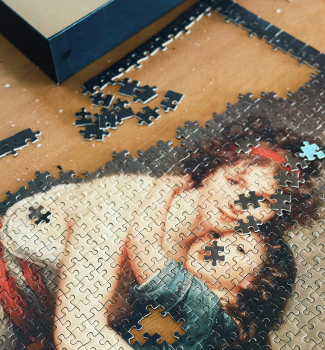
As jigsaw puzzles grew into a popular pastime enjoyed worldwide across all ages and cultures, there was something for every style and taste. Artistic and specialty puzzles emerged showcasing fine art and famous paintings that attracted collectors and art lovers. Photography puzzles that highlighted stunning photos, provided a visually engaging puzzle experience and attracted those who loved travel and nature. Teaching puzzles became popular with educators. To add additional interest many puzzle companies offered specialty puzzles with irregular and creative shapes, boosting challenge and allure.
The Enduring Appeal of Jigsaw Puzzles
Whether you enjoy assembling pictures of scenic landscapes or testing yourself with tricky abstract art, jigsaw puzzles remain a beloved pastime worldwide. They combine the thrill of problem-solving with the joy of creation—plus, there’s nothing quite like the satisfaction of fitting that final piece!
So next time you tackle a puzzle, remember you’re participating in a centuries-old tradition that’s entertained, educated, and challenged people across generations. Happy puzzling!