Puzzle Tips & Tricks: For Every Puzzle Enthusiast
Unlock the Secrets to Completing Jigsaw Puzzles with Confidence and Fun
Jigsaw puzzles aren’t just a fun pastime—they’re a rewarding way to challenge your mind, improve focus, and relax. Whether you’re a beginner or aiming to tackle that 5,000-piece monster, having a solid strategy can make the difference between frustration and satisfaction. Here are some expert tips and tricks to help you complete jigsaw puzzles more efficiently and enjoyably.
These jigsaw puzzle tips & tricks are good to know.
1. Choose the Right Puzzle
Start with a puzzle appropriate for your skill level. If you’re new to puzzling, opt for a puzzle with fewer pieces and a clear, colorful image. More experienced puzzlers can challenge themselves with higher piece counts or intricate designs. Remember, puzzles with lots of similar colors or patterns are generally harder.
2. Prepare Your Workspace
Choose a flat, clean, and well-lit workspace. A large table or a dedicated puzzle mat is ideal. Make sure you have enough space to sort pieces and lay out the puzzle. Good lighting will help you spot subtle color differences, notice tiny details and prevent eye strain.
3. Sort and Organize Pieces
Before you start assembling, turn all the pieces picture-side up. Sort them into groups—edges, corners, and center pieces. You can also organize by color, pattern, or any distinctive feature. Using bowls, trays, or small boxes can keep groups separated and easy to access. When testing pieces, if one doesn’t fit, return it to its sorting tray or general area to maintain organization and prevent re-testing the same pieces repeatedly.
4. First Things First
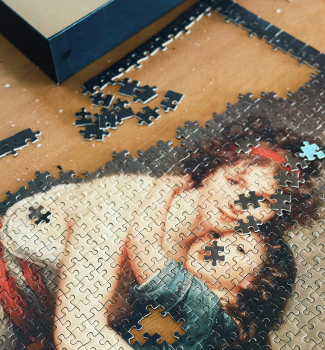
Begin by assembling the edge pieces to create the puzzle’s frame. This foundation gives you a clear outline and makes it easier to fill in the rest. If you find corner pieces, set them aside and use them as anchor points. Consider saving the hardest parts for last. Areas with large expanses of a single, solid color (like a blue sky or green field) are the most challenging. Save these for when the surrounding context helps guide you.
5. Focus on Distinctive Areas
Identify unique colors, patterns, or objects in the puzzle’s image—like a bright red flower or a blue sky. Work on these sections separately, building small clusters that you can later connect to the main frame. This approach keeps momentum going and breaks the puzzle into manageable tasks.
6. Use the Box Image as a Reference
Keep the puzzle box nearby and refer to the image often. It’s your best guide for matching pieces by color, pattern, and shape. Don’t hesitate to compare small details or look for visual clues that can speed up assembly.
7. Try Piece Shape Sorting for Large Puzzles
In very large or complex puzzles, sorting by piece shape can be just as helpful as sorting by color. Group pieces with similar connectors or tabs together, especially when working on areas with similar colors or patterns.
8. Be Patient and Take Breaks
Don’t rush—puzzling is supposed to be enjoyable! If you get stuck, step away for a while. Fresh eyes often spot connections you might have missed before. Taking breaks helps maintain focus and prevents frustration. Don’t spend too much time looking for one piece or forcing them to fit.
9. Be Patient and Take Breaks
Tackle by task. Instead of randomly trying pieces, work systematically. Scan for specific colors or shapes you need, and rotate pieces to see how they might fit. Prioritize high-contrast areas. Staying organized and methodical will save time and keep you motivated.
10. Involve Friends and Family
Puzzling is more fun together! Invite friends or family members to join. Different perspectives can help solve tricky sections, and working together turns puzzling into a social activity.
Bonus Tip: Preserve Your Finished Puzzle
If you’re proud of your completed puzzle, consider preserving it. Use puzzle glue to secure the pieces, then frame it for display. It’s a great way to celebrate your accomplishment and decorate your space.
Keep it Fun: Completing jigsaw puzzles is a blend of strategy, patience, and enjoyment. With these tips and tricks, you’ll boost your puzzling skills and have more fun along the way. Happy puzzling!